
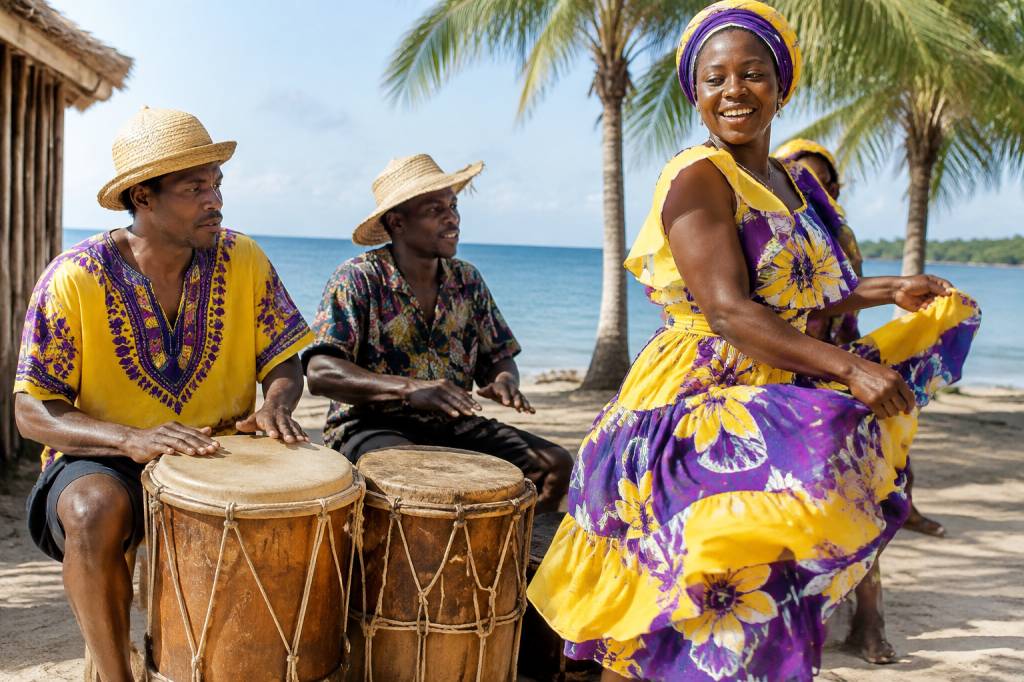
Along Belize’s Caribbean coast, culture moves to its own rhythm. It can be heard in the deep pulse of Garifuna drums, tasted in a bowl of hudut, and felt in the warmth of a village gathering. The Garifuna people are one of Belize’s most distinctive cultural communities, with a heritage shaped by West African, Indigenous Caribbean, and European influences.
For travelers, discovering Garifuna culture is more than adding another activity to an itinerary. It is an opportunity to listen, learn, and connect with a living tradition that has survived displacement, preserved its language, and continued to evolve across generations. From the colorful streets of Dangriga to the quiet coastal village of Hopkins, Belize offers many meaningful ways to experience this remarkable heritage.
Who are the Garifuna?
The Garifuna are an Afro-Indigenous people whose history began on the island of Saint Vincent in the eastern Caribbean. Their ancestors included West Africans who arrived in the region during the colonial era and Indigenous Carib and Arawak peoples. Over time, these communities came together, creating a distinct society with its own language, traditions, music, beliefs, and cuisine.
The Garifuna resisted European control on Saint Vincent for generations. In 1797, following conflict with the British, many Garifuna were deported to the island of Roatán, off the coast of present-day Honduras. From there, families and communities gradually spread along the Caribbean coast of Central America.
The first Garifuna settlers arrived in Belize on November 19, 1802. This date is now celebrated every year as Garifuna Settlement Day, one of the most important cultural celebrations in the country. Today, Garifuna communities can be found in Belize, Honduras, Guatemala, Nicaragua, and other parts of the world.
In 2001, UNESCO proclaimed the language, music, and dance of the Garifuna people a Masterpiece of the Oral and Intangible Heritage of Humanity. That recognition reflects the richness of a culture maintained not only in museums or archives, but in homes, churches, kitchens, beaches, and village streets.
Where to experience Garifuna heritage in Belize
Garifuna culture is especially visible in southern and central coastal Belize. Dangriga is often considered the cultural capital of the Garifuna people. Its name is associated with “sweet water,” and the town has long been an important center for music, art, education, and community life.
Hopkins, a relaxed seaside village south of Dangriga, is another excellent place to discover Garifuna traditions. Visitors can join drumming workshops, take cooking classes, meet local guides, or enjoy live music in a small restaurant or beach bar. The atmosphere is informal, but the cultural experiences can be deeply memorable.
Other important Garifuna communities include Seine Bight on the Placencia Peninsula, Punta Gorda in southern Belize, and Barranco, one of the country’s oldest Garifuna villages. Each community has its own character. Some are lively and tourism-friendly, while others offer a quieter look at everyday coastal life.
When visiting, remember that these are real communities, not staged theme parks. Ask before taking photographs, support local businesses, and choose tours led by Garifuna residents whenever possible. A good cultural experience should benefit the people whose heritage you are there to discover.
The powerful sound of Garifuna music
Music is at the heart of Garifuna identity. Traditional performances often feature several types of drums, including the maracas, or shakers, and a pair of hand-carved drums with different pitches. The lead drummer carries the melody and improvises, while the second drum creates a steady foundation.
Garifuna drumming is not simply background entertainment. It can communicate emotion, tell stories, accompany dance, and connect people with their ancestors. The rhythm may sound joyful and energetic, but it also carries historical memory. Listen closely and you may hear echoes of migration, resistance, family, and the sea.
Punta is probably the best-known Garifuna musical style internationally. Its fast, infectious beat is often paired with energetic dancing, and it has become one of Belize’s most recognizable cultural exports. Punta music can be heard at festivals, community events, restaurants, and celebrations throughout the country. It is difficult to remain still when the drums begin. Consider yourself warned.
Another important style is paranda, which is generally more acoustic and reflective. It often combines guitar, percussion, and vocals to tell stories about love, hardship, community, or daily life. Legendary musicians such as Andy Palacio helped introduce Garifuna music to a global audience while keeping its language and cultural identity at the center.
If you have the chance to attend a live performance, pay attention to the conversation between the drums and dancers. The movement is not random. Dancers respond to the rhythm, and the rhythm responds to the energy of the moment. This exchange gives Garifuna music its remarkable sense of immediacy.
Garifuna Settlement Day
Garifuna Settlement Day takes place every November 19 and commemorates the arrival of the Garifuna in Belize. It is both a national holiday and a deeply meaningful cultural occasion. Celebrations are held in Garifuna communities across the country, with the largest events often taking place in Dangriga.
The day traditionally begins with a reenactment of the Garifuna arrival known as the Yurumein. Participants travel by boat toward the shore carrying food, drums, and symbolic items. Once they reach land, music, dancing, speeches, and ceremonies welcome them into the community.
Yurumein is more than a colorful performance for visitors. It represents migration, survival, and the continuation of Garifuna life in Belize. The boats arriving at the shoreline symbolize the journeys made by earlier generations and the determination to preserve their identity in a new homeland.
Throughout the day, visitors can expect parades, drumming, traditional food, dancing, craft displays, and cultural presentations. Accommodation can fill quickly, especially in Dangriga and Hopkins, so advance planning is essential. If you attend, dress comfortably, arrive with patience, and let local hosts set the tone of the celebration.
Traditional Garifuna food to try
Garifuna cuisine is closely linked to the sea, the land, and the family kitchen. Coconut, cassava, plantain, fish, root vegetables, and green bananas appear frequently in traditional dishes. Recipes vary between families, so the same meal may taste slightly different depending on who prepared it. That is part of the charm.
The most famous Garifuna dish is hudut. It usually consists of mashed green and ripe plantains served with fish cooked in a rich coconut broth. The green plantain gives the mash a firm, savory character, while the ripe plantain adds a gentle sweetness. The fish stew is often flavored with herbs, peppers, onions, and other local ingredients.
Hudut is traditionally prepared with a large wooden mortar and pestle. Watching the plantains being pounded by hand gives you a better appreciation of the time and effort involved. The texture is hearty and comforting, especially after a day spent exploring Belize’s coast.
Another staple is ereba, a flatbread made from cassava. Cassava must be carefully processed because raw cassava contains naturally occurring compounds that can be harmful if prepared incorrectly. The roots are grated, squeezed, dried, and cooked into a dense, slightly crisp bread. Ereba can be served with fish, stews, or other savory dishes.
You may also encounter tapou, a creamy drink made with mashed plantain, coconut milk, and spices, as well as cassava pudding and dishes based on beans, seafood, and ground provisions. Recipes are often passed down orally, from grandparents to children, with measurements based less on written instructions and more on experience.
One of the best ways to explore Garifuna cuisine is through a local cooking class. Instead of simply eating a finished dish, you can learn how ingredients are selected, prepared, and shared. Ask your host about the story behind the meal. Food becomes much more memorable when you understand the hands and history behind it.
Language, dance, and spiritual traditions
The Garifuna language is a central part of the culture. It reflects the community’s complex heritage, incorporating elements connected to Arawakan, Cariban, and other linguistic influences. Although many Garifuna people also speak English, Spanish, or Belizean Creole, the language remains an important marker of identity.
Travelers may hear Garifuna spoken in homes, during ceremonies, in songs, and at community events. Learning a few words can be a thoughtful gesture. A simple greeting such as mabuiga, often used to mean “good morning,” can open a friendly conversation, although pronunciation and usage may vary. The most important thing is to show genuine interest rather than treating language as a novelty.
Dance is equally significant. Garifuna dances can express celebration, courtship, work, remembrance, and spiritual connection. Some performances are energetic and public, while others are associated with sacred ceremonies and should not be treated as entertainment.
The dugu is one of the most important Garifuna spiritual ceremonies. It is held to honor ancestors and address matters affecting the family or community. The ceremony may involve drumming, singing, dancing, prayer, and communal meals over an extended period. Because the dugu is sacred, visitors should never assume they can attend or take photographs. Respect begins with understanding that not every cultural practice is available for public tourism.
How travelers can engage respectfully
Experiencing Garifuna culture responsibly requires more than buying a ticket to a performance. It means approaching the community with curiosity and humility. Here are a few practical ways to make your visit more meaningful:
-
Choose locally owned guesthouses, restaurants, cultural centers, and tour companies whenever possible.
-
Join a drumming, dance, or cooking workshop led by a Garifuna teacher or cultural practitioner.
-
Ask permission before photographing people, ceremonies, homes, or religious objects.
-
Listen to local musicians and purchase music, art, and crafts directly from the artists.
-
Do not touch drums, ceremonial items, or displays without being invited to do so.
-
Learn about the history before visiting, rather than expecting local residents to explain everything from the beginning.
-
Be patient during festivals. Community celebrations follow their own rhythm and may not run according to a strict tourist schedule.
Supporting cultural preservation can also mean visiting museums and heritage centers, attending public talks, and sharing accurate information about Garifuna history after your trip. Tourism can help keep traditions visible and economically sustainable, but only when local communities remain in control of how their culture is presented.
A heritage that continues to evolve
Garifuna culture in Belize is deeply rooted in the past, but it is not frozen there. Young musicians experiment with modern sounds. Artists combine traditional motifs with contemporary design. Chefs reinterpret family recipes while keeping essential ingredients and techniques alive. Community leaders use education, festivals, and digital media to pass knowledge to new generations.
This balance between preservation and change is one of the most fascinating aspects of Garifuna heritage. Tradition does not survive because it refuses to move. It survives because people continue to find meaning in it and adapt it to the present.
Whether you visit Dangriga during Settlement Day, share hudut with a family in Hopkins, hear paranda beneath the palms, or simply listen to a local guide describe the journey of their ancestors, take the time to be present. The most valuable souvenir may not fit in your luggage. It may be a rhythm you remember, a story you finally understand, or a new appreciation for the many histories carried by Belize’s coast.